


From age 50: a ten-year permit, renewable, with USD 2,000 a month

Mauritius Guide
Retiring
in Mauritius
Permits, budget, tax, healthcare: the complete 2026 guide.
The routes that give a retiree residence, the steps in the right order, a couple’s budget built from verified sources, how your pension is taxed and the drawbacks to know before you go.
Retirement in the sun,
done by the book
done by the book
Key points
The essentials at a glance to prepare your retirement in Mauritius.
No age requirement: residence through buying a property worth at least USD 375,000
A foreign pension is taxed in Mauritius only if it is remitted there
No wealth tax, no inheritance tax
01 The permits
Four ways to live in Mauritius in retirement
The retiree permit covers most plans. Buying property and senior residences open other doors, and the Premium Visa lets you try first.
Compare all permits →The retiree permit
- Aged 50 and over
- USD 2,000 a month, or USD 24,000 a year
- Ten years, renewable
The simplest route
Residence through property
- IRS, RES, PDS, Smart City or G+2 property
- At least USD 375,000
- For as long as you own the property
No age or income requirement
Senior residence
- Approved PDS “Senior Living” project
- Purchase, lease or life right of use
- Aged 50 and over
A separate scheme, still little known
The Premium Visa
- One year, renewable, free
- USD 1,500 a month per adult
- Income earned outside Mauritius
To try before committing
| Criterion | Retiree permit | Buying property | Senior residence | Premium Visa |
|---|---|---|---|---|
| Age | 50 and over | None | 50 and over | None |
| Requirement | Certified bank statement: USD 24,000, or a guaranteed income of USD 2,000 a month | Price of at least USD 375,000, at the selling rate on the day of the deed | Home bought, rented or occupied under a life right of use in an approved project | USD 1,500 a month per adult, USD 500 per child |
| Duration | 10 years, renewable for 10 years | For as long as you own it | For as long as you hold or occupy the home | 1 year, renewable |
| Family | Spouse, dependent children, parents | Spouse, dependent children, parents | Spouse | Spouse and children |
| Activity | Invest in a business, without being employed by it or drawing a salary | Invest and work without an Occupation Permit | Not specified in the EDB guidelines | Remote work, no local employment |
Property purchase and retiree permit can be combined
A retiree can buy too. A G+2 apartment can be bought from Rs 6 million, but only a price of at least USD 375,000 gives a right of residence: below that, it is the retiree permit that lets you live here. See buying property in retirement.
Senior residence: a threshold to confirm
The EDB guidelines of January 2025 set no minimum amount; the statutory text we found cites USD 200,000. Either way, it is far below the USD 375,000 of the other schemes: have the EDB confirm the threshold before you sign.
The Premium Visa, to test the water
It covers stays of more than six months and is applied for online, free of charge. You can then move on to the retiree permit, which the EDB grants for ten years instead of one.
02 The steps
The retiree permit, step by step
The application is made online, before you leave. Here is the order of the steps, from the first document to renewal.
What the retiree permit allows →- 1Before leavingChoose the route, gather the documents
- 2OnlineApplication on the EDB platform
- 3Approval in principleThe green light to come
- 4On siteBank, file, permit
- 5Every yearTransfers and statement
- 6After five yearsPermanent residence
- Choose your route. Regular income: the retiree permit. A property purchase of at least USD 375,000: residence through property, for the whole family. The details of each permit are in our residence permit guide.
- Check the financial requirement. A certified bank statement from your country of origin or residence must show USD 24,000, or a guaranteed income of at least USD 2,000 a month.
- Gather the documents. Birth certificate in English or French, otherwise translated by a sworn translator; passport; police record covering ten years, less than six months old; three photos; signed undertaking.
- Submit the application online. Everything is done on the EDB e-platform, with no need to come to Mauritius until approval in principle. Since 1st December 2025, the application fee is USD 50, non-refundable.
- Receive approval in principle. This is the signal to organise your trip and prepare the second set of documents.
- Open a bank account in Mauritius. You must be present, unless introduced by a management company licensed by the FSC; allow about two working days. The account can be held in euros or dollars. See opening a private bank account.
- Complete the file. Mauritian bank statement, marriage or divorce certificate, medical certificate less than six months old, pages of your last entry visa: all originals are shown at the appointment.
- Pay for the permit. The permit fee, USD 1,000, is payable only if the application is approved.
- Bring your family. Spouse, parents and unmarried dependent children obtain a permit of the same duration from the Passport and Immigration Office, provided they do not take up paid work.
- Transfer funds and prove it every year. At the end of each year, a statement or letter from the bank evidences the transfers to the EDB. Your other residences, tax residences included, must be declared: the information is shared with the tax authority.
- Aim for permanent residence. After five years on the permit and USD 200,000 transferred over the five years before the application, the retiree can apply for a twenty-year permanent residence permit.
- Renew on time. The renewal application is filed at least one month before expiry, with a certificate of character covering your three years in Mauritius.
03 The budget
What retirement in Mauritius costs
A couple’s budget in an apartment, built from verified sources, set against the permit threshold.
A retiree’s detailed budget →| Item | Assumption | Per month |
|---|---|---|
| Rent | 3-bedroom apartment, median of 10 Westimmo listings | Rs 55,000 |
| Electricity | 300 kWh a month, CEB residential tariff of 1st May 2026 | Rs 2,075 |
| Water | 20 m³ a month, CWA domestic tariff | Rs 140 |
| Internet and TV | my.t entry-level package | Rs 1,225 |
| Petrol | 60 litres at Rs 70.65, STC price of 15 August 2026 | Rs 4,239 |
| Total | excluding groceries, healthcare, insurance and leisure | Rs 62,679 |
| The permit threshold | USD 2,000 at the Bank of Mauritius rate of 22 September 2026 | Rs 93,900 |
Rents taken from our listings
Median asking rents at 15 September 2026: Rs 55,000 for a 3-bedroom apartment (10 listings), Rs 83,000 for a 3-bedroom villa (11 listings). These are advertised prices: rent is negotiable.
What the threshold leaves
The permit’s USD 2,000 is about Rs 93,900 a month. The table takes Rs 62,679 of it: the rest covers groceries, healthcare and leisure, which vary too much from one household to another to be costed honestly.
Buying rather than renting
As an owner, you remove the first line of the budget. Prices by area and property type are in our property price guide.
04 Tax
How your pension is taxed
Mauritius taxes a foreign pension only if it is remitted there; the tax treaty with your country may reserve the right to tax it for the State that pays it.
French pension in Mauritius →| Subject | The rule | Source |
|---|---|---|
| Tax residence | 183 days in Mauritius in the income year, or 270 days in total over that year and the two before | MRA |
| Pension paid from abroad | Taxable in Mauritius only if remitted there, unless the treaty reserves it for the State that pays it | MRA, Foreign Income; treaties |
| 2026 tax bands | 0% up to Rs 500,000 a year, 10% up to Rs 1 million, 20% up to Rs 12 million, 35% above | Finance Act 2026, s. 7 |
| UK pensions | Private pension or annuity: Mauritius only, for the part received there; State Pension: ‘other income’ article; government service pension: UK only, unless you are a Mauritian national and not British | UK treaty, art. 18, 19 and 22 |
| South African pensions | Fund pension: taxable in South Africa and, if received in Mauritius, there too, with a credit for South African tax; government pension: South Africa only | South African treaty, art. 17, 18 and 22 |
| Wealth, inheritance, gift, property capital gains | No tax in Mauritius | Finance Acts 2026 |
French retirees: six categories
Not all French pensions follow the same rule: a public-sector pension and an optional private pension have nothing in common with the general-scheme state pension. The detail, category by category, is in our guide to French pensions in Mauritius and in the France–Mauritius treaty explained.
A worked example
A private pension of Rs 900,000 a year, remitted to Mauritius, bears Rs 40,000 of tax on the bands alone: nothing on the first Rs 500,000, 10% on the next Rs 400,000, before deductions.
Other nationalities
Among others, Mauritius has a tax treaty with Belgium, Luxembourg, Germany, South Africa, the United Kingdom, the United Arab Emirates and Italy; none with Switzerland. The treaty with your country decides where your pension is taxed.
05 Health and neighbourhoods
Getting healthcare, and choosing where to live
Two questions that shape a retiree’s daily life: access to care and distance to services.
Neighbourhoods compared →Public hospitals
Care there is free, according to the EDB, which presents a health system that is both public and private.
Private clinics
Consultations, tests and hospital stays must be paid for: it is better to have suitable cover before you need it.
Health insurance
Local or international: choose on age, cover limits and repatriation. See health insurance: local or international and retirees’ healthcare in Mauritius.
Three regions, three ways of life
The West: Tamarin and Black River
Leeward coast, lagoon, sunsets over Le Morne mountain, village life. Properties: real estate in Tamarin.
The North: Grand Baie and Pereybère
The liveliest region: shops, restaurants and services, often a few minutes away. Properties: real estate in Pereybère.
The South: Bel Ombre
Unspoilt nature, golf courses, large estates; quieter, but further from the capital’s services. Properties: real estate in Bel Ombre.
06 No filter
The real drawbacks, and the fix
Better to know these six constraints before you leave than to discover them in your first year.
Distance
Family is a long-haul flight away: every trip home needs planning and budgeting.
The fix: fewer but longer trips, booked early, and a home that can welcome the grandchildren.
Exchange rates
A pension in pounds, rand or euros, spending in rupees: the budget follows the exchange rate.
The fix: a euro or dollar account in Mauritius, and conversions as needed rather than all at once.
Imported goods are expensive
Cheese, wine, household appliances: imported goods quickly weigh on the budget.
The fix: buy local and seasonal, and compare prices between shops with the MOPRI app.
A car is almost essential
Away from the main roads, public transport is poorly suited to everyday journeys.
The fix: choose your area near shops and a clinic, then the home within that radius.
Cyclones and humidity
The southern summer brings cyclone alerts; humidity damages fabrics and electronics.
The fix: a home built to standard, with cross-ventilation, and home insurance that covers cyclone risk.
A permit to keep track of
Transfers to prove every year, a renewal to prepare in advance: the permit does not run itself.
The fix: a calendar of deadlines, and someone on the ground who knows which office handles what.
07 Related guides
Further reading
The guides that detail each aspect of your retirement in Mauritius.
 French pension in MauritiusSix categories, six tax rules→
 A retiree’s budgetMonthly spending in detail→
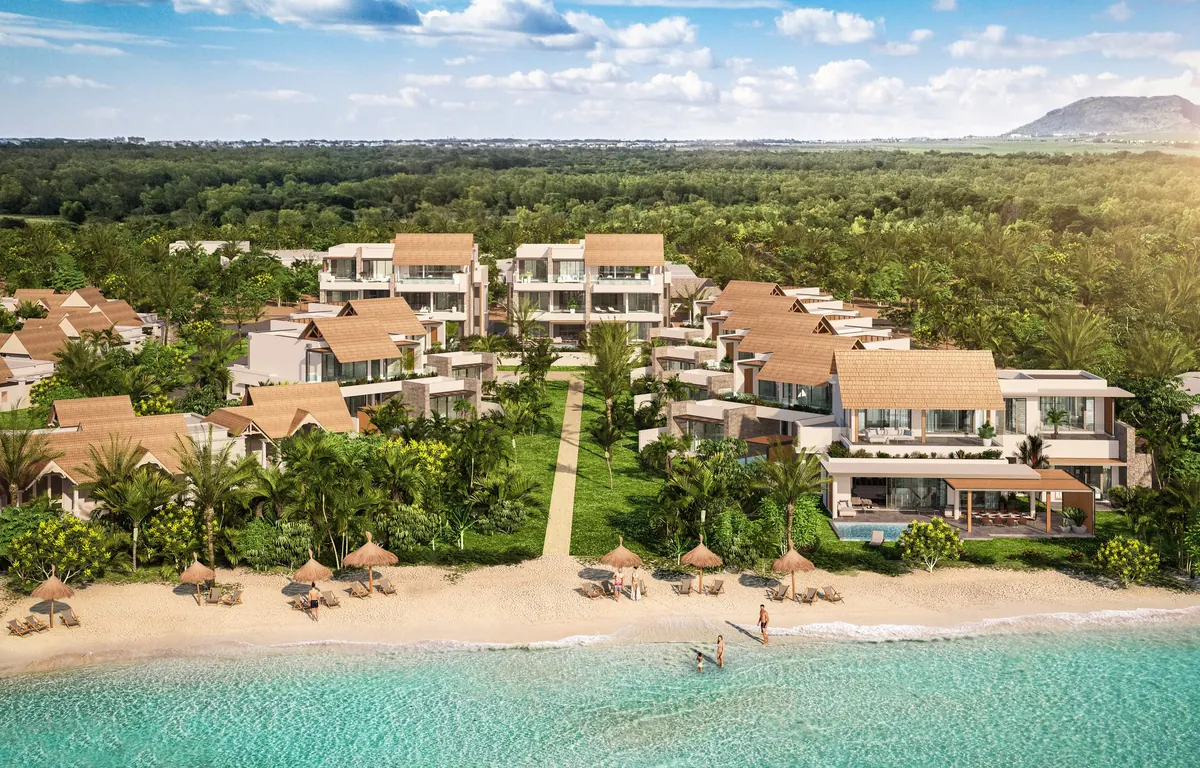 Buying in retirementBenefits, steps and pitfalls→
 Which areas for a retireeAreas compared→
 Visas and residence permitsEach permit, its thresholds and steps→
 Working with a retiree permitWhat is allowed, what is not→
08 Sources & methodology
Reliable, up-to-date information
Thresholds come from official texts and the EDB portal, rents from our own listings.
EDBEconomic Development BoardMRAMauritius Revenue AuthorityLawsImmigration Act, Finance ActWestimmoPublished listings
- Economic Development Board, residency.mu — pages Retired Non-Citizen +50 years, Retire, Permanent Residence Permit, PDS, Smart City and G+2, read on 2 October 2026
- Economic Development Board — Guidelines PDS for Senior Living, January 2025; USD 50 application fee since 1st December 2025
- Immigration Act 2022, sections 8 and 10 — residence from USD 375,000, retiree permit, right to invest
- Passport and Immigration Office and EDB — Premium Visa, checked on 8 September 2026 for our visa guide
- Mauritius Revenue Authority — tax residence, foreign-source income; Finance Act 2026 (Act No. 14 of 2026), income tax bands
- UK–Mauritius tax treaty of 1981, art. 18, 19 and 22; South Africa–Mauritius treaty of 17 May 2013, art. 17, 18 and 22; France–Mauritius treaty of 11 December 1980 for French pensions
- Bank of Mauritius — indicative exchange rates of 22 September 2026
- Utility Regulatory Authority, Central Water Authority, State Trading Corporation, my.t — tariffs surveyed on 15 September 2026 for our “Living in Mauritius” guide
- Westimmo — published rental listings, survey of 15 September 2026, medians on at least 8 listings
Figures checked on 2 October 2026. This guide does not replace the advice of the EDB, the MRA or an adviser: conditions are confirmed on the day of application.
09 Frequently asked questions
Your questions about retiring in Mauritius
Short answers to the most frequent questions.
Frequently asked questions about retiring in Mauritius
The retiree permit is open from age 50. Residence by buying a property of at least USD 375,000 has no age requirement.
A certified bank statement must show USD 24,000, or a guaranteed income of at least USD 2,000 a month, about Rs 93,900 at the rate of 22 September 2026. Transfers are then evidenced to the EDB every year.
Ten years, renewable for ten years, according to the EDB on 2 October 2026. Some sites mention five years: that is not what the official portal states.
A USD 50 application fee, non-refundable, since 1st December 2025, then a USD 1,000 permit fee, payable only if the application is approved.
No: the permit imposes no minimum stay. But beyond 183 days of presence in the year, you become tax resident in Mauritius.
A retiree can invest in a business, without being employed by it or drawing a salary from it. Residence obtained by buying property, on the other hand, allows you to invest and work without an Occupation Permit.
Yes, from USD 375,000 for an IRS, RES, PDS or Smart City property or a G+2 apartment. The permit lasts as long as you own the property and extends to your spouse, dependent children and parents.
A project approved by the EDB, reserved for people aged 50 and over, with a clubhouse and services. Buying, renting or holding a life right of use over a home there gives you and your spouse a right of residence; have the EDB confirm the price threshold.
It depends on its type. A UK private pension is taxable only in Mauritius, for the part received there; a UK government service pension stays taxable in the UK. A South African fund pension is taxed in South Africa, then in Mauritius if received there, with a credit for South African tax.
No. Mauritius levies no inheritance or gift tax, no wealth tax and no tax on property capital gains.
Care is free in public hospitals and charged in private clinics. Health insurance, local or international, covers the clinics.
Yes: after five years on the retiree permit and USD 200,000 transferred over the five years before the application, the EDB issues a twenty-year permanent residence permit, renewable.