



Banking in Mauritius: Accounts, Banks and Private Banking for Expats
MCB, SBM, Absa, Bank One: how to open an account (even as a non-resident), multi-currency accounts, the property payment chain and private banking in Mauritius.
Opening a bank account in Mauritius is easier than you might think: the island’s main banks — MCB, SBM, Absa, Bank One — open accounts for non-residents as well as new residents, in rupees, euros or dollars, with well-established private banking for wealth clients. Here is how to prepare your file, choose your bank and organise your flows between Europe, Africa and Mauritius.
Key takeaways:
- An account is possible before you even reside: passport, proof of address, bank reference and source of funds make up the KYC file.
- Multi-currency accounts (MUR, EUR, USD): keep your euros or dollars and convert when it suits you.
- Mauritius is an international financial centre: fast transfers, private banking, relationship managers used to expatriates.
Which banks should you consider in Mauritius?
- MCB (Mauritius Commercial Bank): the country’s leading bank, densest network, used to foreign clients.
- SBM (State Bank of Mauritius): the other historic major player, present across the island.
- Absa Mauritius: the pan-African group’s base, appreciated by South African and international clients.
- Bank One and niche banks: personalised service and private banking.
Which documents do you need to open an account?
The typical KYC file includes: a valid passport, recent proof of address, a bank reference or statements, and evidence of the source of funds. Non-residents can open accounts — and it is even smoother once the residence permit is obtained. Allow a few days to a few weeks depending on the bank and profile.
Organising your flows with Mauritius
- Multi-currency account: keep EUR/USD and convert to rupees at the right moment.
- Property purchase: funds pass through the notary’s escrow account — a fully documented banking chain.
- Rental income and pensions: easily domiciled in Mauritius; taxation follows your tax residence, framed by double-taxation treaties such as the France-Mauritius treaty.
Private banking: from what point?
Mauritian banks offer private banking and wealth management with entry thresholds that vary by institution. For a property investor the benefit is concrete: a dedicated contact, possible financing, multi-currency management and support in structuring your assets tax-efficiently.
⚠️ The costly mistake: launching a property purchase before opening the account and documenting the source of funds. An incomplete KYC can delay the transfer to the notary by weeks — and cost you the unit. Open the account as soon as the project gets serious, not the day before signing.
Frequently asked questions
Can a non-resident open a bank account in Mauritius?
Yes: passport, proof of address, bank reference and source of funds make up the KYC file. It is even simpler once resident.
Can you keep euros or dollars in a Mauritian account?
Yes, multi-currency accounts (MUR, EUR, USD) are common: you convert whenever you choose.
What are the island’s main banks?
MCB and SBM dominate the local market; Absa Mauritius and Bank One complete the offering, with private banking services.
How do you pay for a property from abroad?
By international bank transfer to the notary’s escrow account, with a documented chain — the standard route for foreign buyers.
We help our clients with their first banking steps in Mauritius: tell us about your project.
Further reading
Go further on the subject
Other articles to take your thinking further.

Open a Private Bank Account in Mauritius from Dubai
Guide to opening a private bank account in Mauritius from Dubai: AfrAsia, MCB, SBM, procedures, compliance, and wealth strategy.
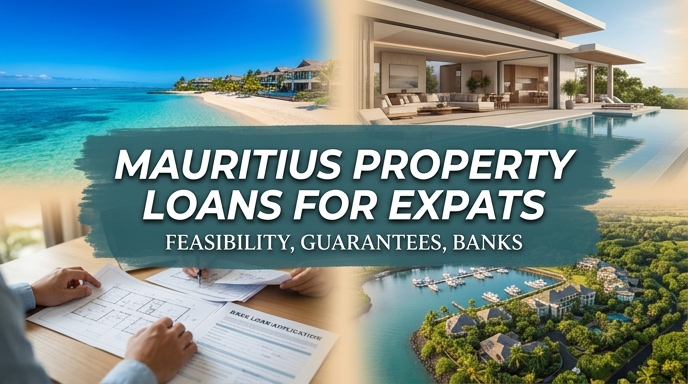
Mauritius Mortgage for Expats: Market Signals to Watch
Deposit, guarantees, banks, PDS and timing: a prudent method for assessing a mortgage in Mauritius as an expatriate.
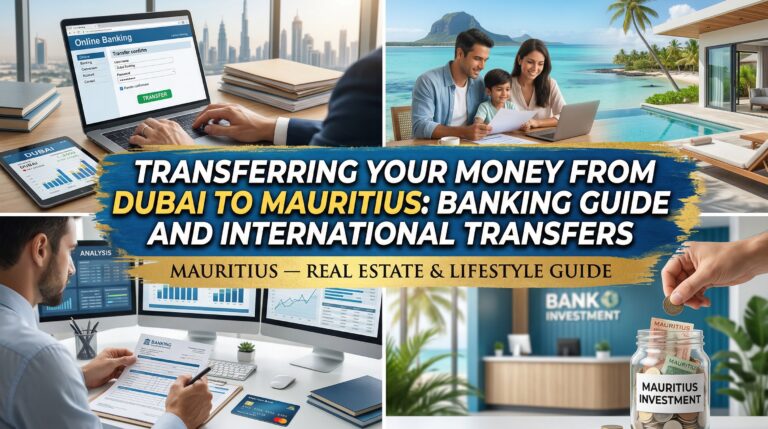
Transferring Money from Dubai to Mauritius: Banking Guide and International Transfers
Comprehensive guide on transferring money from Dubai to Mauritius: banks, transfers, KYC compliance, exchange rates, and practical advice for expat…

All new property developments in Mauritius
Discover new developments in Mauritius and explore opportunities tailored to your real estate project.
Planning a property project?
Let’s talk about your project in Mauritius
Westimmo guides you through the analysis, selection and securing of your property project in Mauritius.