


Le Morne Brabant: the Story of Mauritius’ Sacred Mountain
Maroon refuge, the legend of 1 February 1835, UNESCO listing, the national flower: the story of Le Morne Brabant, the sacred mountain of south-west Mauritius.
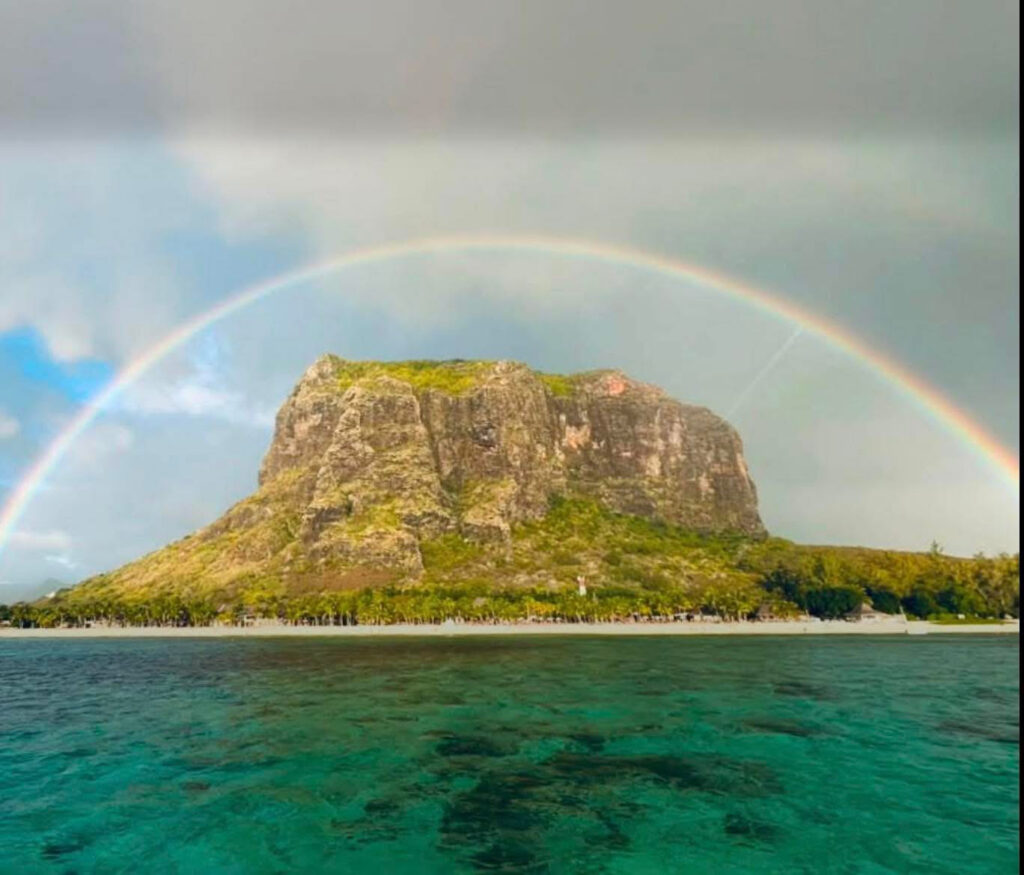
Some mountains are climbed; others are listened to. Le Morne Brabant belongs to the second kind. This 556-metre basalt monolith, rising at the far south-western tip of Mauritius on a peninsula wrapped in a turquoise lagoon, is at once a geological masterpiece, a UNESCO World Heritage site since 2008, and the Indian Ocean’s foremost memorial to slavery. A refuge for runaway slaves in the 18th and early 19th centuries, and the setting of a legend that still moves the whole island every 1st of February, it has become a people’s symbol of freedom. This is its story.
A fortress born of fire
Le Morne Brabant is one of the most spectacular remnants of the volcano that created Mauritius some eight million years ago. Erosion wore away everything around it, leaving only this near-vertical monolith crowned by a flat summit. Seen from the lagoon it seems to rise straight out of the sea; seen from the air it seals off the peninsula like a citadel. Its flanks conceal caves, overhangs and hidden ledges — a detail that would prove decisive in its history.
The name is thought to come from the Brabant, a Dutch ship said to have skirted the point in the 17th century, while “morne” is the old island French word for a massive, rounded hill. Mauritians simply say “Le Morne” — and everyone understands it means far more than a mountain.
The refuge of the maroons
In the 18th and 19th centuries, Mauritius — Isle de France under the French, then a British colony after 1810 — lived off sugar cane, worked by tens of thousands of slaves deported from Madagascar, Mozambique, East Africa and India. Some refused their condition and fled: they were called maroons, from the Spanish cimarrón, “the one who escapes”.
Few places on the island offered a hiding place as perfect as Le Morne. Its cliffs made it almost impregnable, its caves gave shelter from wind and rain, and from its summit any approaching expedition could be spotted miles away. Oral tradition and the archaeological work carried out since the 2000s agree: small maroon communities lived up there, with their shelters, water points and secret paths, just hours from the plantations they had fled. Le Morne thus became, across the south-western Indian Ocean, a symbol of resistance to slavery — precisely what UNESCO would consecrate two centuries later.
The legend of 1 February 1835
Slavery was abolished in Mauritius on 1 February 1835. Popular memory tells that an expedition — police or soldiers, depending on the version — climbed the mountain to announce the news to the maroons hiding at the top. Seeing the uniforms approach, they believed a capture raid was under way and threw themselves from the cliffs rather than return to bondage. They died free, never knowing they already were.
Historians are honest about it: no archive documents the scene, and the account belongs to oral tradition. But its power goes beyond the question of proof. Handed down through generations, the story tells of the absolute terror slavery inspired and the price men and women were prepared to pay for freedom. That is why on 1 February, the public holiday commemorating abolition, the whole island converges on Le Morne village: ceremonies, drums, séga and remembrance at the foot of the mountain.
From forbidden place to World Heritage
For decades, village elders would not even point at Le Morne — one does not point at the dead. It was only in the 2000s that remembrance took shape: the Le Morne Heritage Trust Fund was created in 2004, excavations began, and family stories were collected. On 6 July 2008, UNESCO inscribed the “Le Morne Cultural Landscape” on the World Heritage List as an exceptional testimony to maroonage and its universal significance.
The following year, the international Slave Route Monument was inaugurated at the foot of the mountain, near the former village of Trou Chenille: nine sculptures from nine countries, facing the sea, recall that captives were brought here from across the Indian Ocean and Africa. The site is today one of only two UNESCO-listed properties in Mauritius, together with the Aapravasi Ghat in Port Louis — one tells the story of slavery, the other of the indentured labour that followed it.
A living mountain: the flower that grows nowhere else
Le Morne is not only a memorial: it is also an ecological sanctuary. Its slopes shelter one of the island’s last pockets of native vegetation, including an absolute marvel: the boucle d’oreille (Trochetia boutoniana), the national flower of Mauritius since 1992, which grows in the wild only on the flanks of Le Morne Brabant. Orange-red and bell-shaped, it blooms from June to October under the watch of botanists. Above the cliffs glide the white-tailed tropicbirds — the paille-en-queue — whose long-streamered silhouette is the island’s other emblem.
Le Morne today: hiking, One Eye and the sweet life
The mountain can be climbed — and the ascent is superb. Allow three to four hours round trip: a first half on a broad forest trail, then a steep section where hands are needed, up to the summit cross and one of the finest panoramas in the Indian Ocean, with the famous “underwater waterfall” illusion visible offshore. Start early (access opens around 7 am), wear proper shoes, carry plenty of water — and a guide is strongly recommended for the upper section. To compare with the island’s other summits, see our guide to the 15 best hikes in Mauritius.
⚠️ The costly mistake: attempting the summit without a guide, in flip-flops or after rain. The final section is a genuine scramble on sometimes slippery rock, with no fixed equipment: every year hikers have to be rescued. The lower trail is free to walk, but the summit must be earned — accompanied.
At the foot of the mountain, the peninsula lives with the wind: One Eye, one of the most famous kitesurfing waves in the world, draws riders from every continent, while Le Morne public beach lines up its casuarina trees facing the sunset. Some of the island’s finest hotels share the lagoon, and the villages of La Gaulette and Le Morne keep their wild-coast soul, twenty minutes from the shops of Black River.
Living with Le Morne on the horizon
To live in the south-west is to live with that silhouette on the skyline — from a terrace in Black River or La Preneuse, a pontoon on Tamarin bay, or the hills of Bel Ombre, whose golf estates look out over the same sea the maroons once watched from their lookouts. It is one of the reasons this coast remains the most sought-after on the island: you do not simply buy a house here, you settle into a landscape steeped in history. To explore the region further, our guide to the most beautiful beaches of Mauritius and our Living in Mauritius guide are the perfect companions.
Frequently asked questions about Le Morne Brabant
How high is Le Morne Brabant?
The summit rises 556 metres above the lagoon, on a peninsula at the far south-western tip of Mauritius.
Why is Le Morne a UNESCO World Heritage site?
The “Le Morne Cultural Landscape” has been on the World Heritage List since July 2008 as an exceptional testimony to maroonage: the mountain sheltered runaway slaves and remains the symbol of their resistance and their sacrifice for freedom.
Is the legend of the slaves who leapt from the summit true?
No archive confirms it: it is an oral tradition handed down by village families. It is commemorated every 1 February, the anniversary of the abolition of slavery (1835), with ceremonies at the foot of the mountain.
Can you climb to the top of Le Morne Brabant?
Yes. The lower trail is freely accessible from the morning; the final section, steep and rocky, is best done with a guide. Allow 3 to 4 hours round trip with good shoes and water.
Where can you see the boucle d’oreille, the national flower of Mauritius?
In the wild, Trochetia boutoniana grows only on the slopes of Le Morne Brabant. It blooms mainly from June to October.
Further reading
Go further on the subject
Other articles to take your thinking further.
Discover Mauritius’ Most Beautiful Beaches: Top 10 for Investors and Expats
Explore Mauritius' top 10 beautiful beaches: access, activities, and tips for investors and expats. Discover Mauritius' paradisiacal beaches.
Mauritian Culture and Traditions: What Makes the Island Unique
Explore Mauritian culture, its traditions, multiculturalism, and must-see sites that make Mauritius unique and welcoming.
Sports and Leisure Activities in Mauritius: Golf, Diving, Hiking and More
Explore leisure in Mauritius: golf, diving, hiking, water sports, and clubs for investors, expatriates, and foreign buyers.
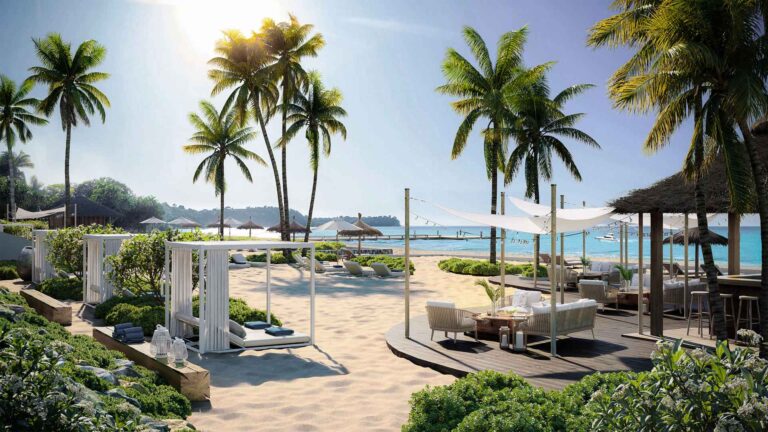
All new property developments in Mauritius
Discover new developments in Mauritius and explore opportunities tailored to your real estate project.
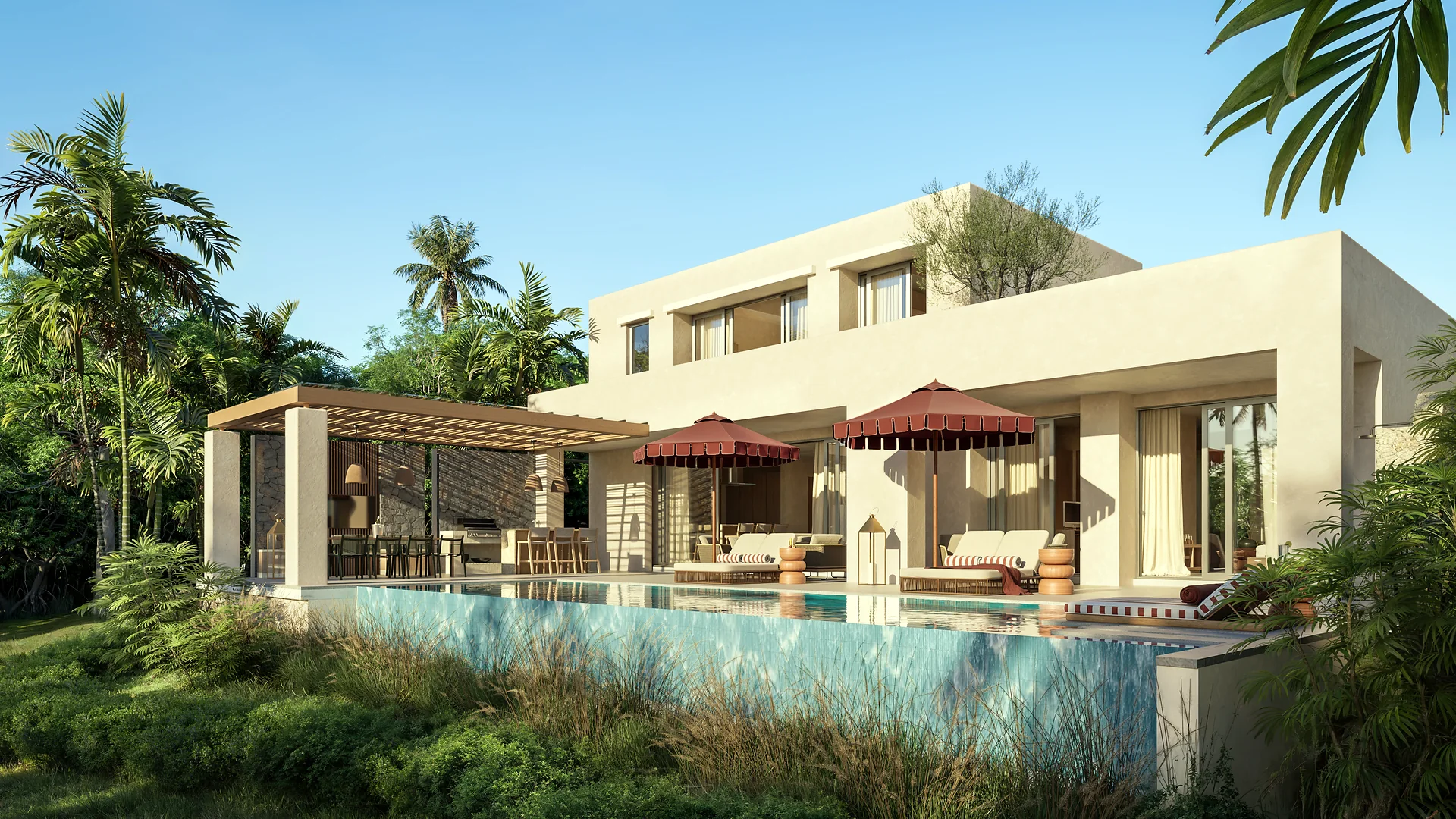
Bel Ombre Real Estate: Villas & Estates
Planning a property project?
Let’s talk about your project in Mauritius
Westimmo guides you through the analysis, selection and securing of your property project in Mauritius.