


Gateau Piment: The Mauritian Chilli Fritter Recipe
The gateau piment (gato pima), a split-pea fritter with chilli and coriander, is one of the best-selling snacks in Mauritian markets. The traditional recipe, step by step.
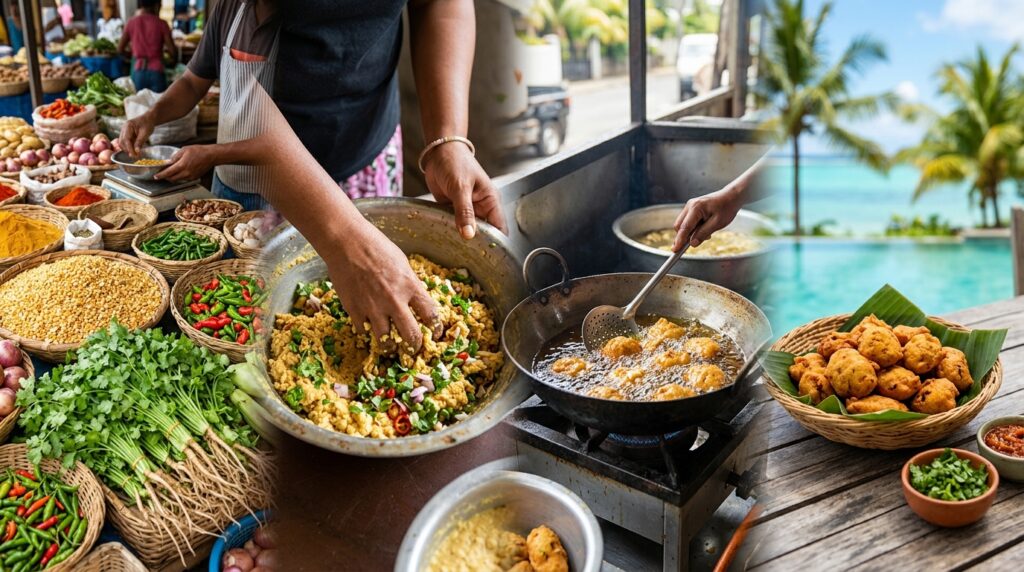
The gâteau piment, or gato pima in Creole, is a fried fritter made from dholl (yellow split peas), flavoured with chilli, coriander and cumin. It is one of the best-selling snacks in the markets and streets of Mauritius, at any hour of the day. The dholl soaks for at least three hours before being crushed, seasoned and fried. Here is the traditional recipe, step by step.
Ingredients (makes about twenty fritters)
- 250 g dholl (yellow split peas)
- 2 green chillies
- 1 onion, chopped
- 2 tablespoons chopped shallots
- 2 tablespoons chopped fresh coriander
- 1 teaspoon ground cumin
- Salt
- Oil for frying
The recipe, step by step
Soaking the dholl
Wash the yellow split peas and soak them in cold water for at least three hours, ideally overnight. It is this soaking that lets you crush them without cooking them.
The mixture
Drain the dholl, then crush it in a blender or with a mortar, deliberately leaving a few pieces: too smooth a purée gives dense fritters, whereas a slightly coarse texture keeps the inside soft. Mix with the chilli, onion, shallot, coriander, cumin and salt.
Shaping and frying
Form small, slightly flattened balls about 4 cm across. Fry them in good hot oil — high heat at first to seal the outside, then moderate heat to cook them through without burning the crust. Drain on kitchen paper and serve warm.
Where the gâteau piment comes from
The gâteau piment descends directly from the vadai, a lentil fritter from southern India. It is thought to have been brought by indentured workers from the Indian subcontinent, who arrived in Mauritius in the nineteenth century. The same preparation exists in Réunion under the name bonbon piment: another name for the same savoury fritter, born of the same culinary mixing.
How and when to eat it in Mauritius
The gâteau piment is eaten at any time: as an aperitif, as an afternoon snack, or tucked into buttered bread with chatini — a raw condiment of pounded chilli and spices. That combination has a name of its own, dipain gato pima, an everyday Mauritian classic. You will find it with street vendors and on market stalls across the island, notably in Mahébourg or in the markets of the west coast, often made on the spot and served still hot.
Other classics of Mauritian street food are just as easy to make at home, such as mine frit or sausage rougaille.
Sources and verification
Planning a property project?
Let’s talk about your project in Mauritius
Westimmo guides you through the analysis, selection and securing of your property project in Mauritius.