


Gato Arouille: Mauritian Taro Fritters Recipe
Gato arouille, Mauritian taro fritters: the recipe, how to grate, shape and fry them, and four versions compared, served hot with chilli.
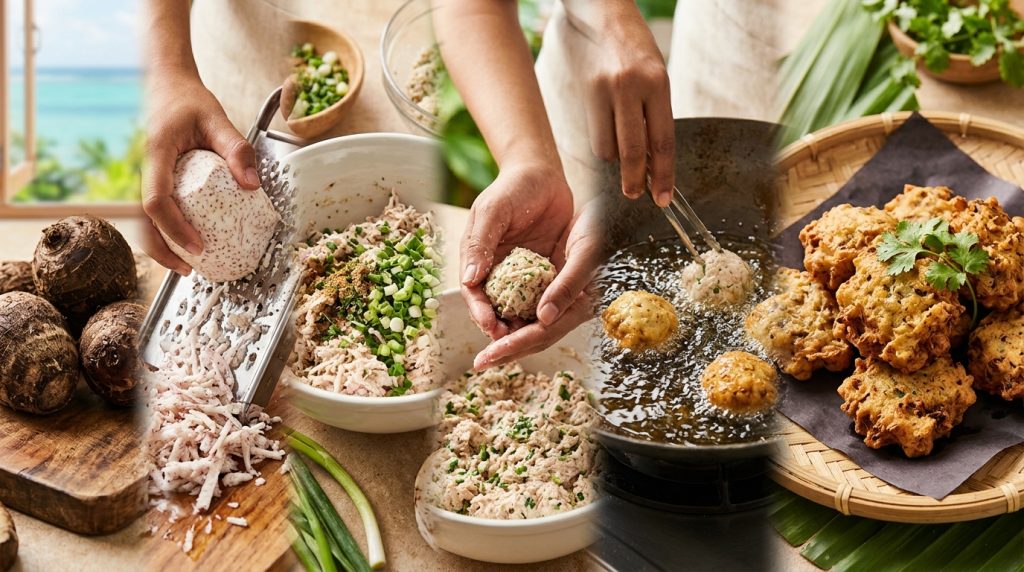
Gato arouille (also spelt gato arouy) are fried balls of grated taro, crisp outside and soft inside. “Arouille” is the Mauritian word for taro. You peel and grate the root, bind it with a little starch, ginger and salt, shape it into balls and deep-fry them. Serve them hot, with a chilli sauce.
What gato arouille are
Like banana fritters and gateaux piments, they are fritters, not baked cakes. The taro goes into the oil raw and grated, never boiled first. People eat them as a starter or a snack, and they belong to Mauritian street food alongside dholl puri. To see where they sit among the island’s other specialities, read our guide to Mauritian cuisine.
None of the recipes we read documents who invented them or when, so we would not offer a history.
Ingredients
There is no single standard. The quantities below follow a recipe published on Expat.com and make a batch from about 600 g of taro, which is five or six roots depending on size.
- 600 g taro
- 2 slices of bread
- 2 tablespoons sugar
- 1 teaspoon ground ginger
- 1 teaspoon salt
- 1 tablespoon cornflour
- 1 tablespoon soy sauce
- oil for frying
The bread is the binder: cut off the crust, wet the crumb and crush it before mixing it into the taro. Other cooks skip it and bind with starch alone (see the table below).
Step by step
1. Peel and grate the taro
Raw taro contains calcium oxalate, which irritates the skin and the mouth. A New Zealand vegetable guide advises wearing kitchen gloves to peel it, and a blogger who tried arouille in Mauritius says his fingers tingled for hours without gloves, and that frying removed the sting completely. So wear gloves to peel, then grate the root.
2. Mix
Wet the crustless bread, crush it and work it into the grated taro. Add the sugar, ginger, salt, cornflour and soy sauce and mix well. Another Mauritian recipe lets the mixture rest for 30 minutes before shaping.
3. Shape the balls
Shape them by hand or with two small spoons. One recipe points out that ragged edges make the fritters crisper, so there is no need for perfectly smooth balls.
4. Fry
Heat the oil and add the balls a few at a time, without crowding the pan. The published recipes give neither an oil temperature nor a time; the cue is visual, deep golden and crisp. Because taro has to be cooked through, let them colour properly rather than lifting them out early. Drain on kitchen paper.
Serving
Serve gato arouille hot, with a chilli sauce or a coriander chutney. They turn soft and greasy as they cool, so eat them straight away.
Four ways to make them
The base is always grated taro, ginger and frying. The binder, the seasoning and the filling vary from one recipe to the next.
| Recipe | Taro | Binder | What sets it apart |
|---|---|---|---|
| Expat.com | 600 g | wet bread and 1 tablespoon cornflour | soy sauce and sugar; served with chilli sauce |
| Cuizine Maurice | 650 g | 6 tablespoons cornflour | 30-minute rest; filled with a cooked shrimp or a cube of cheese |
| Brinda Bungaroo | 3 to 4 medium violet taro | 2 to 4 tablespoons cornflour | spring onions, green chilli and coriander or parsley; served with chilli sauce or coriander chutney |
| Jídlo na cestách | no quantities given | a little breadcrumb or starch, no egg or flour | taro fried raw, with ginger and soy sauce |
Where to find them in Mauritius
Gato arouille are sold as a snack. In one travel write-up, a blogger paid Rs 25 a ball from a vendor in Flic en Flac. That is a single observation, given as an indication only, and the price may have changed. He describes eating them by hand, hot, with a green or red chilli paste.
Frequently asked questions
Can I use frozen taro?
Yes, according to Brinda Bungaroo’s recipe, which says frozen taro pieces are sold in most Asian supermarkets. It does not say how to handle them, so check the packet.
Do I need eggs or flour?
None of the recipes we read uses egg. The binder is starch, sometimes wet bread or breadcrumbs.
Why does taro make my hands itch?
Raw taro contains calcium oxalate. Wear gloves to peel it, and never taste the raw mixture.
Can I keep the balls for the next day?
None of the sources gives storage advice. They describe a dish to eat hot, which goes soft and greasy as it cools.
Sources and checks
- Expat.com: gato arouy recipe, quantities and method.
- Cuizine Maurice: gato aroui with shrimps and cheese.
- Brinda Bungaroo: violet taro fritters.
- Jídlo na cestách: gato arouille, tingling from raw taro, price noted in Flic en Flac.
- Vegetables.co.nz: preparing taro, gloves, cooking it through.
Planning a property project?
Let’s talk about your project in Mauritius
Westimmo guides you through the analysis, selection and securing of your property project in Mauritius.