


Mauritian Cuisine: Must-Try Specialities
Mauritian cuisine, a reflection of the island's cultural blend, offers a unique sensory experience. Discover must-try specialities, top dining spots, and the Creole way of life in Mauritius.
Mauritian cuisine captivates with its diversity and unique flavours, a result of an exceptional cultural blend. For investors, expatriates, or foreign buyers, exploring the Creole cuisine and local specialities of Mauritius is an essential immersion into the Mauritian way of life. From the moment you arrive, let the aromas of spices, colourful markets, and the warm welcome of authentic tables guide you.
What are the major influences on Mauritian cuisine?
Mauritian cuisine reflects a rich history, shaped by waves of immigration from India, China, Africa, and Europe. This cultural mosaic is evident in every dish, where Indian spices, Creole sauces, Chinese techniques, and French touches blend together. Fragrant curries sit alongside dim sum, while rougailles and vindayes grace every table. This culinary diversity makes Mauritian Creole cuisine an unparalleled sensory experience.
What are the must-try dishes in Mauritius?
Among the unmissable specialities of Mauritian cuisine, some dishes are true symbols of conviviality and sharing:
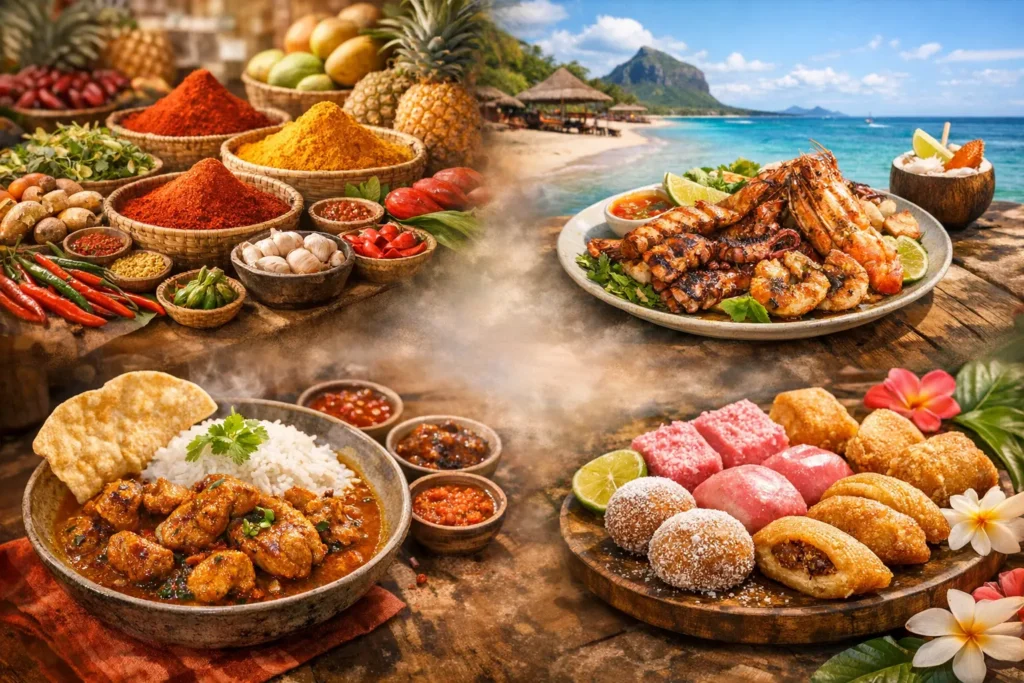
- Rougaille: This tomato stew, spiced with garlic, ginger, and spices, accompanies fish, sausages, or seafood. It embodies Creole cuisine in all its simplicity.
- Mauritian Curry: Different from Indian curry, it is flavoured with curry leaves, coconut milk, and local vegetables, often served with basmati rice and lentils.
- Biryani: Inherited from Indo-Muslim tradition, this fragrant rice dish, garnished with meat or fish, is a staple at grand occasions.
- Mine Frit: A Chinese-inspired dish, stir-fried noodles are mixed with vegetables, prawns, or chicken, enhanced with a local soy sauce.
- Bouillon Bredes: A light soup made from green leaves (bredes), ideal for accompanying a meal or starting the day.
- Dholl Puri: A thin flatbread made from split peas, filled with cari gros pois and chutney, sold at markets and on the streets.
- Gâteau Piment: Spicy split pea fritters, perfect for a quick snack.
- Chicken Vindaye: An Indian-inspired dish, chicken is marinated in vinegar, mustard, and spices, then slowly simmered. Vindaye is also made with fish, fried, then pickled and served cold: see the fish vindaye recipe.
Another Sino-Mauritian dish, bol renversé brings together rice, stir-fried chicken and egg, turned out of a bowl onto the plate.
Each speciality tells a story, that of Mauritian families, religious festivals, and bustling markets. Exploring Creole cuisine is diving into the soul of Mauritius.
Where to eat in Mauritius for an authentic experience?
To savour Mauritian cuisine, there are many renowned places, from gourmet restaurants to family-run guest tables. Here are some must-visit spots:
- Le Château de Bel Ombre: Nestled in the south of the island, this restaurant offers refined Creole cuisine in a historic setting.
- Chez Tante Athalie in Pamplemousses: An institution for tasting typical dishes in a colonial house surrounded by tropical gardens.
- Le Café des Arts in Trou d’Eau Douce: Set in a former sugar factory, this venue combines art and Mauritian gastronomy, with an inventive menu.
- Le Fangourin at L’Aventure du Sucre: Ideal for discovering Creole cuisine in a chic industrial decor, at the heart of a museum dedicated to the history of sugar.
- La Table du Château in Labourdonnais: Creole cuisine revisited with garden produce, in an elegant setting.
- Le Chamarel Restaurant: Panoramic views of the south-west coast and local specialities made from fresh produce.
- Port Louis Street Food: For an authentic experience, wander the central market and taste dholl puri, Chinese dumplings, and gâteau piment from street vendors.
These addresses offer a comprehensive panorama of Creole cuisine, from the refinement of grand tables to the conviviality of street food. For newcomers, they are an ideal first step to getting acquainted with the Mauritian way of life.
What local products to discover at Mauritian markets?
Mauritian cuisine relies on the richness of local produce. Markets are brimming with tropical fruits (Victoria pineapples, lychees, mangoes, guavas), colourful vegetables (chayote, aubergines, pumpkin), and spices (turmeric, cinnamon, cardamom). Fresh fish, lobsters, and seafood abound on the stalls, as do homemade breads and artisanal jams. The markets of Mahébourg, Quatre Bornes, and Goodlands are renowned for their atmosphere and the quality of their products. Don’t hesitate to taste the local specialities offered on site, such as samosas or coconut cakes.
How does Creole cuisine aid the integration of expatriates in Mauritius?
For expatriates and investors, discovering Mauritian cuisine is a fantastic means of integration. Sharing a Creole meal, participating in a cooking workshop, or exploring local markets helps forge connections with the Mauritian community. Cooking schools, such as La Bonne Marmite in Grand Baie or Les Ateliers du Goût in Moka, offer courses to learn how to prepare local specialities. This culinary immersion facilitates adaptation and provides a deeper understanding of the island’s culture.
To further your relocation project, discover our complete guide: settling in Mauritius.
What typical desserts and drinks to savour in Mauritius?
Mauritian cuisine wouldn’t be complete without its emblematic sweets and drinks. Among the desserts, gâteau patate (made from sweet potato and coconut), poudine maïs (corn pudding), and napolitain (shortbread biscuit filled with jam) delight both young and old. As for drinks, alouda (a basil-flavoured milk drink), fresh fruit juices, and spiced rum are must-tries. Tea enthusiasts will appreciate the Bois Chéri plantations, where you can taste teas flavoured with vanilla or lemon.
Why does Mauritian cuisine attract investors and expatriates?
The richness of Creole cuisine is one of Mauritius’s major attractions for investors and expatriates. It reflects the open-mindedness, tolerance, and cultural blending that characterise Mauritian society. Settling in Mauritius also means adopting a lifestyle where conviviality, discovery, and sharing are central to daily life. Business opportunities in the restaurant, hospitality, or agri-food sectors are numerous, driven by the rise of gastronomic tourism and the promotion of local produce.
How to explore Mauritian cuisine daily?
To fully enjoy Mauritian cuisine, vary your experiences: try starred restaurants, guest tables, food trucks, and markets. Participate in culinary festivals, such as the Bernard Loiseau Culinary Festival, or workshops organised in hotels in Grand Baie or Flic en Flac. Immerse yourself in traditions during religious festivals, where Creole cuisine plays a central role. Finally, don’t hesitate to cook local specialities yourself, sourcing ingredients from Mauritian producers.
Mauritian cuisine, rich in its influences and flavours, is a privileged gateway to understanding and loving Mauritius. Whether you’re an investor, expatriate, or simply curious, each meal is an invitation to travel and discover.
Further reading
Go further on the subject
Other articles to take your thinking further.
Mauritian Culture and Traditions: What Makes the Island Unique
Explore Mauritian culture, its traditions, multiculturalism, and must-see sites that make Mauritius unique and welcoming.

United Colors of Mauritius – Mauritius: an exotic destination for expatriates seeking cultural diversity
Expatriate to Mauritius made easy - Why come to live and work in Mauritius - Expatriation made easy

Enjoying Grand Baie: Fine Dining, Nightlife and Luxury Leisure
Discover Grand Baie's fine dining, nightlife, and luxury leisure for expatriates and investors. Lifestyle guide, top spots, and practical tips.

All new property developments in Mauritius
Discover new developments in Mauritius and explore opportunities tailored to your real estate project.

Grand Baie Real Estate: Buy or Rent
Planning a property project?
Let’s talk about your project in Mauritius
Westimmo guides you through the analysis, selection and securing of your property project in Mauritius.