


A non-citizen cannot freely buy residential land: a certificate or an approved route is required, otherwise the deed is void (sections 3 and 5)
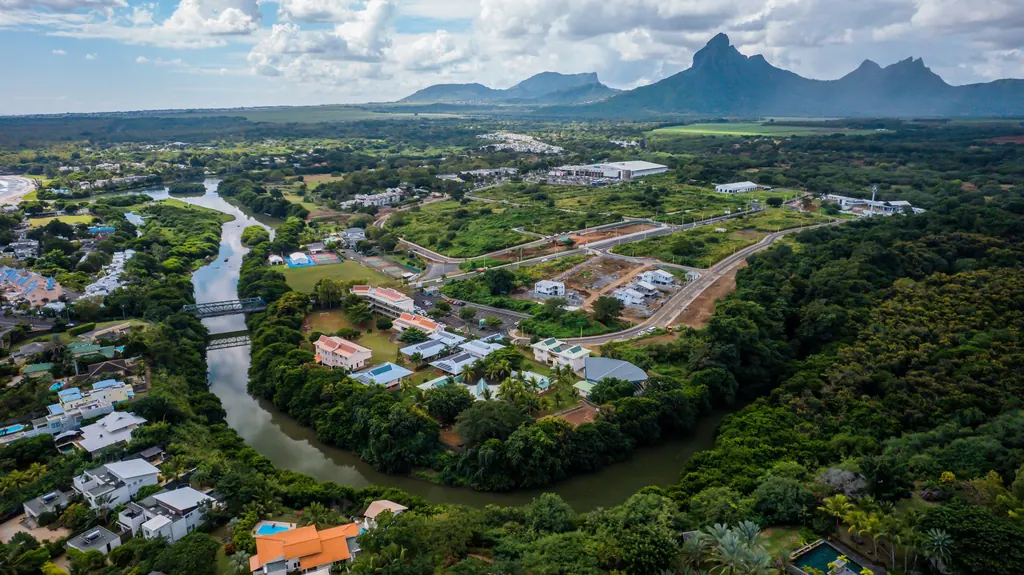
Mauritius Guide
Buy land
and build a house in Mauritius
What a foreigner can acquire, the toise, subdivision, the building permit and the budget: the order in which things are done.
In Mauritius, bare land is not bought the way it is in Europe, and a house cannot be built without a permit. This guide sets out the legal framework from the texts, explains the price per toise, details the building permit and the subdivision permit, and puts the steps of a project in order, from the plot to the handover of the keys.
First the land,
then the house: in the right order
then the house: in the right order
Key points
The essentials before viewing a plot or signing a promise to sell.
The approved routes cover homes sold by an IHS, PDS or Smart City company; a bare plot is assessed case by case
No construction without a Building and Land Use Permit; the registration duty remains 5%
A toise is 3.8 m² and an arpent is 1 111 toises: always read a price in the right unit
01 The legal framework
Can a non-citizen buy land in Mauritius?
The honest answer takes two sentences: not freely, and not without authorisation. Here is what the text says.
Read our article on the legal framework →| Route | What the text says | For land |
|---|---|---|
| Ministerial certificate | A non-citizen who wishes to hold or acquire property applies to the Minister for a certificate, which is granted subject to conditions (section 3(1) and (2)) | General route, outside the EDB standard procedure: to be handled with a notary before any promise to sell |
| IHS, PDS or Smart City company | Purchase of a villa, apartment, penthouse or similar property for residential use from a company holding this certificate (section 3(3)(c)(iii)) | The route covers a home sold by the company; the purchase of a bare plot within such a project is checked project by project |
| IRS or RES company | Purchase of residential property from a company holding an IRS or RES certificate, despite the repeal of the original scheme (section 3(3)(c)(vii)) | Same caveat: the law refers to residential property, not a bare plot |
| G+2 apartment | Apartment in a building of at least two floors above the ground floor, costing at least Rs 6 million, with EDB authorisation (section 3(3)(c)(v)) | Not applicable: it is not land |
| Lease | Commercial or industrial lease of up to 20 years, excluding residential, and a simple letting of up to 4 years, without a certificate (section 3(3)(a)) | A residential lease of more than 4 years requires a certificate |
| Outside an authorised route | The agreement is void; the Curator takes the property and has it sold, with the net proceeds going to the purchaser (section 5) | This is the risk with land bought “outside the framework” |
The text does not mention bare land
The law does not expressly prohibit bare land, but no exemption in section 3(3)(c) covers it. A non-citizen’s purchase of land therefore goes through a certificate or an approved project: this is the caution Westimmo applies to every file.
The word “company” matters
An unlisted company is a non-citizen as soon as a single shareholder is one (section 2). Buying through a Mauritian company does not get around the rule.
A deposit before authorisation
Paying a deposit on land outside the framework, expecting to regularise it afterwards, is the costliest mistake: without authorisation, the deed is void (section 5). A promise to sell is signed subject to a condition precedent of authorisation.
02 Before you sign
Nine checks before buying land
Each one is verified against the documents, before the deposit and not after.
- Who is selling and under what regime. Have the notary establish whether the seller is an IHS, PDS, Smart City, IRS or RES company, and whether your status as a non-citizen is covered by section 3. Outside the framework, the deed is void.
- The nature of the land. Agricultural land cannot be built on without prior conversion; seafront land may belong to the State or fall within the Pas Géométriques. Ask for the title and the authorised use before your next visit.
- The subdivision permit. For a plot from a subdivision, the subdivision permit determines what is actually serviced: roads, water, electricity, drainage. Ask for it, together with the approved subdivision plan.
- Boundaries and surface area. Have the area and boundaries checked by a sworn land surveyor, and have the area stated in m² in the deed: a toise, a perche and an arpent are not interchangeable.
- Flood risk. A plot can be expensive because it is both beautiful and fragile. Read our guide to flood-prone areas before commissioning any plans.
- Sanitation. Mains sewer or septic tank: the answer changes the cost and the constraints of the permit. Our septic tank or sewer guide lists what to check before signing.
- Access and utilities. A right of way, an electricity pole to be moved or a distant water main should be costed before the promise to sell, not during construction.
- The estate’s rules and restrictions. In a regulated project, you also buy rules: heights, materials, style, construction deadlines. Read them before reserving the plot.
- The intermediary. Choose a professional who shows you the documents before the deposit. Westimmo works with notaries and checks the regime, the title and the utilities of a plot before offering it to you.
Citizen and non-citizen: two sets of rules
A non-citizen does not buy on a citizen’s terms: section 3 of the Non-Citizens (Property Restriction) Act requires a certificate or an authorised route, and the duty exemptions provided for first-time buyers should be costed with the notary.
A residence permit is not automatic
The EDB guidelines link the 375 000 USD threshold to the acquisition of a home, G+2 apartments included. Do not assume that bare land opens the way to a permit: have your case confirmed by the EDB.
Nothing signed lightly
A promise to sell, a preliminary agreement and a power of attorney are all binding. Have each document reviewed by a Mauritian notary.
03 Subdivision and permits
From subdivision to building permit
Two separate authorisations: one divides the land, the other authorises the house.
Read the details of the building permit →| Step | What you need to know | Text or source |
|---|---|---|
| Subdivision | Dividing land into plots requires a subdivision permit: it determines the servicing actually delivered | Subdivision procedure: see our article on the subject |
| Amendment to the Morcellement Act in 2026 | Section 38 of Act No. 13 of 2026 repeals section 5(2)(aa) of the Morcellement Act, removes the definitions of “Association Foncière” and “green forest” and repeals the Fourth Schedule; section 5(2A) disapplies these requirements for applications made before its entry into force. Have the notary confirm the effect on a given subdivision | Economic and Financial Measures (Miscellaneous Provisions) Act 2026 (Act No. 13 of 2026), section 38 |
| Building and Land Use Permit | Anyone wishing to build or demolish a building, or to develop land, submits an application for Outline Planning Permission or a Building and Land Use Permit to the district council or the municipality | Local Government Act 2011, section 117(1)-(2) |
| Processing time | The Permits and Business Monitoring Committee has 14 working days from actual receipt of the application to issue the permit or notify a reasoned refusal | Local Government Act 2011, section 117(7); actual time to be confirmed at your local council counter |
| Occupancy certificate | It is mandatory at the end of the works, before living in the house | Same source |
| Land purchase duties | 5% registration duty payable by the purchaser, 5% transfer tax payable by the seller; the increase to 10% has been repealed | Finance Act 2026, sections 9 and 16; EDB guidelines |
Two permits, two applications
The subdivision permit is the developer’s concern, the building permit is the plot owner’s. A purchaser who receives a serviced plot does not have to chase the first, but must make sure it exists.
The tax figures for land
The 5% registration duty is calculated on the price of the land. For a precise amount, use our purchase costs calculator, then have the notary confirm it.
Read a land price in the market unit
Agents quote a price per toise, notaries a surface area in square metres, and old titles use arpents or perches. Convert everything into m² before comparing two plots, and relate the price to the buildable area rather than the total area. Our article on the price of land per toise gives the table by region and the converter.
What we do not publish
No average processing time and no permit cost appear here: we will publish them once we have measured them on real files.
04 Steps and budget
Building your house: the order and the cost items
A construction budget is built on quotes. Here are the items to plan for, without an invented price per square metre.
| Step | What is done | Budget item |
|---|---|---|
| 1. Secure the land | Check the regime, the title, the subdivision plan, access and utilities | 5% registration duty, notary fees according to the official scale, authorisation file |
| 2. Check the site | Flooding, sanitation, agricultural use or not | Surveyor, soil study depending on the land |
| 3. Design | Architect, plans, choice of contractor | Architect’s fees, compared quotes |
| 4. Obtain the BLUP | Online submission, processing, fee payable on issue | Fee set by the council |
| 5. Build | Notify the council in writing before the works begin, build under inspection | Contractor, imported materials, contingencies |
| 6. Connect | Electricity, water, sanitation | Connection fees vary with the distance to the networks |
| 7. Obtain the occupancy certificate | Before moving in | End-of-works formalities |
05 Building in a project
Land in an estate or an isolated plot: two ways to build
The setting changes the constraints, the timescales and the legal security.
See the development land page →In an approved estate
The framework is clear: roads, utilities and the architectural specifications already exist. You choose your architect within rules that protect the value of the whole, and the regime is established before the purchase.
On an isolated plot
The choice is wider, the checking heavier: regime, land use, access, utilities, flood risk and sanitation are down to you and your notary.
The real timeline
Between the promise to sell, the authorisation, the building permit and the works, several administrations act in turn. Allow a margin in your residence or rental planning, and do not terminate a lease before you have the permit in hand.
Connections
Electricity, water and sanitation are applied for from the relevant bodies with plans signed by the architect. Land far from the networks costs more to connect: ask the bodies for their opinion before buying, not after.
For a developer
Subdividing and reselling is a trade of its own, with its subdivision permit and its obligations. Our dedicated development land page presents this segment.
06 Common misconceptions
Seven mistakes that circulate about land in Mauritius
Each one is corrected by a text or a calculation.
“A foreigner buys land like a Mauritian”
No: a non-citizen goes through a certificate or an approved route, otherwise the deed is void (sections 3 and 5).
“Buying through a company solves the problem”
An unlisted company is a non-citizen as soon as a single shareholder is one (section 2).
“Purchase duties are going up to 10%”
That increase was repealed by the Finance Act 2026: the registration duty remains 5%.
“A toise is a square metre”
A toise is 3.8 m² and an arpent is 1 111 toises, or about 4 220 m².
“Subdivision always imposes the same obligations”
Not quite: Act No. 13 of 2026 (section 38) repealed section 5(2)(aa) of the Morcellement Act and removed the notions of “Association Foncière” and “green forest”; have the notary confirm what applies to your subdivision.
“Work can begin before the permit”
Any construction requires an application for a Building and Land Use Permit or Outline Planning Permission from the council (Local Government Act 2011, section 117(2)): do not start before you have the permit in hand.
“A construction price per m² is officially published”
No official scale sets one: the budget is fixed on quotes.
07 Related guides
Going further
The articles that detail each step, and the land we present.
08 Sources & methodology
Reliable, up-to-date information
The rules come from the legal texts and the EDB guidelines, the prices from the market surveys cited.
WestimmoOur reference articlesAGOOfficial legal textsMRAMauritius Revenue AuthorityEDBEconomic Development Board
- Non-Citizens (Property Restriction) Act, sections 2, 3 and 5, consolidated version Issue 9 — Attorney General’s Office, read on 9 November 2026
- EDB guidelines on the acquisition of residential property by non-citizens — Economic Development Board
- Finance Act 2026 (Act No. 14 of 2026), sections 9 and 16 (5% duties), read on 9 November 2026
- Economic and Financial Measures (Miscellaneous Provisions) Act 2026 (Act No. 13 of 2026), section 38 (subdivision), read on 9 November 2026
- Local Government Act 2011 (Act 36 of 2011, Revised Laws Issue 9), sections 117 and 120, read on 9 November 2026
- Estate Agents Association, indicative prices per toise, survey of August 2026 reproduced in our article on land prices
- Notaries Act, scale of notary fees, section 37 and schedule, Part I
Texts read on 9 November 2026 or taken from our internal references. This guide is no substitute for a notary’s advice: have the regime and the title of a plot checked before paying a deposit.
09 Frequently asked questions
Your questions on land and construction
Short answers, backed by the texts.
Frequently asked questions on buying land and building in Mauritius
Not freely. A non-citizen who wishes to acquire property applies for a ministerial certificate (section 3(1) and (2)), or uses an approved route, such as buying residential property from an IHS, PDS, Smart City, IRS or RES company. Outside these routes, the deed is void (section 5). Have a notary check your case before any deposit.
The ministerial certificate, the purchase of residential property from an IHS, PDS, Smart City, IRS or RES company, the G+2 apartment costing at least Rs 6 million with EDB authorisation, and the lease within the limits of section 3(3)(a). A bare plot is checked project by project.
The agreement is void: the Curator takes possession of the property and has it sold, and the proceeds of the sale, after deduction of costs, go to the non-citizen (section 5). This is why a promise to sell is signed subject to a condition precedent of authorisation.
Yes, but on land that he or she is entitled to acquire or lease: a plot in an approved project or land obtained through an authorised route. Construction then requires a Building and Land Use Permit.
It is the permit that authorises a construction or a land development (Local Government Act 2011, section 117). The application is submitted to the district council or the municipality, and the Permits and Business Monitoring Committee has 14 working days to reply. Our building permit guide details the file.
It is the authorisation that allows land to be divided into plots. It determines the servicing actually delivered. Act No. 13 of 2026 (section 38) amended the Morcellement Act: it removes the notions of “Association Foncière” and “green forest”; the notary confirms what applies to your subdivision.
A toise is 3.8 m², a perche is 11.1 toises and an arpent is 1 111 toises, or about 4 220 m². The price per m² is the price per toise divided by 3.8. The market surveys of August 2026 range from Rs 30 000 to Rs 90 000 per toise depending on the region, for guidance only.
The registration duty is 5% payable by the purchaser and the transfer tax is 5% payable by the seller. The increase to 10% planned for 1 July 2026 has been repealed. Notary fees are added, at the official scale.
No official scale sets a price per square metre: the budget is fixed on quotes compared between contractors. We do not publish a per-m² figure that we have not measured on real files.
Yes. An occupancy certificate is required at the end of the works, before living in the house. Also notify the council in writing before opening the site.
The regime applicable to your status, the title, the authorised use, the subdivision permit, the boundaries, flood risk, sanitation, access and utilities. Our guide to flood-prone areas and the one on the septic tank detail these two checks.
Westimmo checks the regime, the title and the utilities with a notary before offering you a plot, presents its land and projects, then puts you in touch with architects and contractors for the construction.