


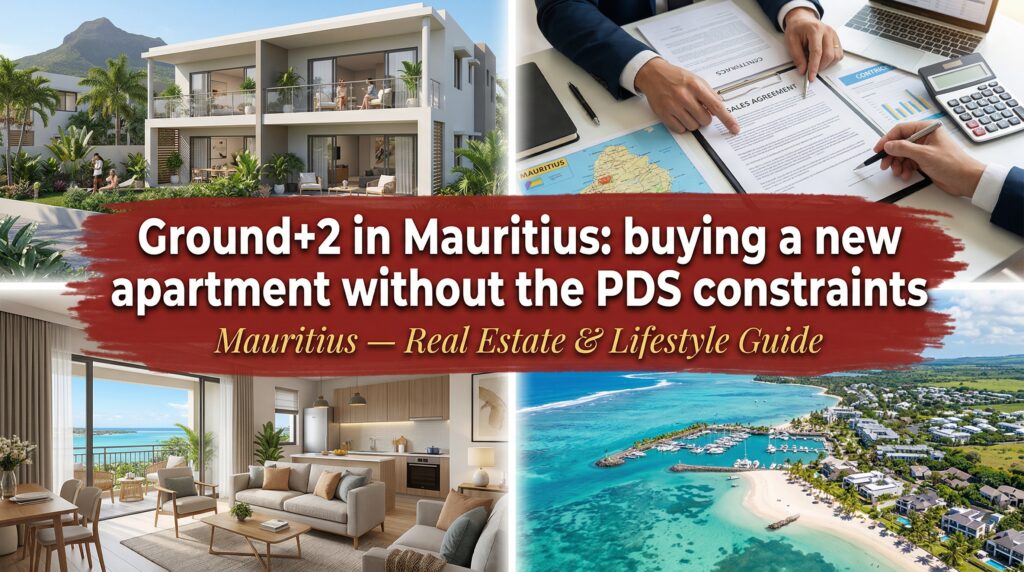
Buying a G+2 (R+2) Apartment in Mauritius as a Foreigner: 2026 Rules
A foreigner can buy an apartment in a G+2 (R+2) building in Mauritius from Rs 6 million, with EDB approval. The residence permit starts at US$375,000 and registration duty stays at 5%: threshold, costs, resale and State land, the rules in force on 17 September 2026.
A foreigner can buy an apartment in Mauritius outside the PDS scheme when the building has at least two floors above the ground floor (G+2 in the administration’s terms, R+2 in French) and the price reaches Rs 6 million, about €110,000. Prior approval from the Economic Development Board (EDB) is required. That threshold lets you buy, not settle: the residence permit starts at US$375,000, a little over Rs 18 million on 17 September 2026. Registration duty stays at 5%, the rise to 10% having been repealed in August 2026.
What is a G+2 (R+2) purchase in Mauritius? Definition and legal framework
As a rule, a non-citizen needs a certificate from the Minister to buy property in Mauritius. The G+2 purchase is one of the exceptions: section 3(3)(c)(v) of the Non-Citizens (Property Restriction) Act exempts a foreigner who buys an apartment for residential use in a building of at least two floors above the ground floor. The route was opened by a reform that came into force on 22 December 2016, and the August 2026 legislation left it unchanged.
Four conditions apply together:
- the apartment is for residential use;
- the building has at least two floors above the ground floor; the law sets no condition on which floor the apartment itself is on;
- the purchase price is at least Rs 6 million, or the equivalent in a convertible hard currency;
- the EDB issues an authorisation, after approval from the Minister responsible for home affairs.
The G+2 route is not limited to new builds: under the EDB guidelines, the apartment can be bought off-plan, under construction or completed, including on resale, together with its share of the common parts of the co-ownership. A villa or a house, including twin villas and townhouses, does not qualify, and land bought by a foreigner falls under other rules.
The entry ticket: Rs 6 million, and what it covers
The minimum price is Rs 6 million per apartment, about €110,000 or US$125,000 at the average indicative rates published by the Bank of Mauritius on 17 September 2026. The amount can change without a new Act, since the section allows another figure to be set by regulations; on 17 September 2026, both the consolidated Act and the EDB guidelines state Rs 6 million.
It is a price floor, not a budget. It covers the apartment and its share of the common parts; registration duty and the notary’s fees come on top, followed by co-ownership charges. The law refers to the “purchase price” without saying how VAT, furniture or a separately sold parking space are treated: close to the threshold, ask the notary to confirm the amount stated in the deed.
In Westimmo’s listings, every G+2 apartment is well above this floor. On 17 September 2026, our G+2 apartments for sale range from Rs 15.5 million (two bedrooms, 101 m², in Piton) to Rs 65.5 million (beachfront, Balaclava), with a median price close to Rs 26 million. Tamarin accounts for more than a third of them; the others are in places such as Roches Noires, Flic en Flac, Calodyne, Belle Mare and Mont Choisy.
Who can buy a G+2 apartment in Mauritius, and on what conditions?
Any non-citizen can apply, whether or not they hold an occupation, residence or permanent residence permit. The EDB guidelines also allow a purchase by a company incorporated or registered in Mauritius, a “société” whose deed of formation is filed with the Registrar of Companies, a limited partnership, a trust managed by a licensed trustee, or a foundation. Buying through a company does not get around the rule: under the Act, a company with a non-Mauritian shareholder is itself a non-citizen.
Three limits apply:
- a married couple buys jointly on production of the marriage certificate, but a joint application by unmarried partners is not considered;
- buying through a transfer of shares in a société civile immobilière d’attribution (SCIA, a property-allocation company) is excluded;
- shares in a company that owns the apartment cannot be transferred without prior authorisation.
Does buying a G+2 apartment give you a residence permit?
Not at Rs 6 million. Section 8(1)(f) of the Immigration Act 2022 makes a foreigner eligible for a residence permit if they buy a G+2 apartment for at least US$375,000 or its equivalent, calculated at the selling rate on the day the deed is signed. At the average indicative rate of 17 September 2026 (Rs 48.36 to the dollar), that is about Rs 18.1 million: close to the limit, keep a margin for exchange-rate movements.
The spouse, dependent children, parents and other dependants are eligible on the same basis. According to the EDB, the permit remains valid for as long as the buyer owns the apartment: it is tied to the property, not a permanent residence. It is not automatic, as the Director-General of Immigration issues it with the Minister’s approval. The threshold is the same as under PDS, IRS, RES or Smart City; other permits are compared in our guide to the residence permit in Mauritius.
G+2 vs PDS: the key differences for foreign buyers
Under the PDS (Property Development Scheme), a foreigner buys a villa, an apartment or a penthouse from a company holding a PDS certificate. G+2 does not depend on any approved scheme: the seller can be a developer, a company or a private individual, Mauritian or foreign.
| Route | What you buy | Minimum price to buy | Residence permit |
|---|---|---|---|
| G+2 (R+2) | A residential apartment in a building of at least two floors above the ground floor, new or resale, with EDB authorisation | Rs 6 million per apartment | From US$375,000 |
| PDS | A villa, apartment or penthouse sold by a company holding a PDS certificate; a serviced plot on which to build your residence, on EDB conditions | No amount in the non-citizens law | From US$375,000; above US$200,000 for a “senior living” PDS property if the buyer is over 50 at the time of application |
| Smart City | A home sold by a company holding a Smart City certificate, or a serviced plot on which to build your residence | No amount in the non-citizens law | From US$375,000 |
| IRS and RES | A residential property sold by a company already holding an IRS or RES certificate, the provisions on these certificates having been repealed | No amount in the non-citizens law | From US$375,000 |
Another practical difference: under IRS, RES and PDS, the EDB guidelines for these schemes require letting through the project company or the operator it appoints, whereas the G+2 guidelines contain no equivalent rule. The procedure for each scheme is set out in our guide on buying under PDS, IRS, RES, R+2 or Smart City.
Practical advantages of buying a G+2 apartment
- A threshold set by law and known in advance: Rs 6 million per apartment.
- A wide choice: off-plan, under construction, completed or resold between private owners.
- Locations in the north, west and east of the island.
- Several ways to buy: in your own name, as a married couple, through a company, a trust or a foundation.
- A residence permit for the buyer and family from US$375,000.
Limits, precautions and points to watch when buying G+2
Residential use only, no speculation
The EDB authorisation covers residential use and requires the owner not to put the apartment to any other use, not to transfer it without authorisation and not to engage in property speculation. It is valid for six months: plan to sign the deed within that period.
Renting out a G+2 apartment
The EDB’s G+2 guidelines set no letting rules. Letting to tourists, however, falls under the Tourism Authority, which issues tourist accommodation certificates: see our guides on buying for short-term rental and tax on rental income in Mauritius, and have the project checked by the notary.
Reselling
A foreign owner who sells must notify the Director-General of the EDB in writing within the 30 days before the sale; the resale file includes the EDB’s letter of no objection. No minimum price applies to the seller, but a foreign buyer files their own application, and their price must reach Rs 6 million.
State land and Pas Géométriques: the 2026-2027 Budget restriction
In the Budget Speech of 19 June 2026 (paragraphs 180 to 182), the government announced that it would no longer grant leases allowing the sale of G+2 apartments built on State land or on the Pas Géométriques, and would therefore no longer allow their sale to foreigners. Leases already approved and resales by a current owner are not affected. The Pas Géométriques are the coastal strip of public domain, at least 81.21 metres wide from the high-water mark of spring tides.
The Finance Act 2026 added the tax side: an additional duty of 10%, paid by the seller, on the transfer to a foreigner, under the G+2 route, of a home located on this land. It comes on top of the 5% land transfer tax, unless a preliminary contract (reservation or promise of sale) was signed before a notary before 19 June 2026. Before reserving, ask the notary whether the building stands on State land; the other measures are summarised on our Mauritius Budget 2026-2027 page.
Buying without authorisation: a void sale
A purchase made in breach of the Act is void: the Curator takes possession of the property and has it sold, then pays the proceeds, less costs, to whoever is entitled to them. The non-citizen is also liable to a fine of up to Rs 10,000 and imprisonment for up to one year.
Purchase costs in 2026: 5% duty, not 10%
When buying a G+2 apartment, the buyer pays 5% registration duty on the value of the property, and the seller pays 5% land transfer tax. On a Rs 20 million apartment, the buyer’s duty comes to Rs 1 million, before the notary’s fees.
A 2025 amendment had raised both levies to 10% for transfers to foreigners from 1 July 2026. The Finance Act 2026 (Act No. 14 of 2026, assented to on 12 August 2026) repealed these increases: the rate stays at 5%, even though the 10% figure is still circulating. The only exception is the additional 10% duty payable by the seller on State land and the Pas Géométriques. For notary’s fees and who pays what, see our guide to registration duty and notary fees in Mauritius.
When is G+2 a better fit than PDS?
A G+2 purchase particularly suits:
- buyers looking for an apartment outside an approved scheme, including a resale between private owners;
- investors who do not want to depend on the manager imposed under IRS, RES or PDS;
- expatriates who already hold an occupation permit or a retirement permit and do not need the purchase to give them a permit;
- families seeking residence with an apartment of at least US$375,000, the same threshold as PDS.
PDS remains the better fit for buyers who want a villa or an estate with services, or for buyers over 50 looking at a “senior living” PDS property, which opens residence above US$200,000. To compare current projects, see our new developments in Mauritius.
Worked examples: a home or an investment, budget and status
Calculations at the rates in force and the Bank of Mauritius exchange rates of 17 September 2026:
- Investment at Rs 15.5 million, the entry price of Westimmo’s G+2 listings: the purchase is allowed, but the price, about US$320,500, is below US$375,000 and does not open a residence permit. Registration duty: Rs 775,000.
- An apartment to live in, at Rs 20 million in Tamarin, about US$413,600: the buyer, spouse and dependent children can apply for a residence permit, provided the price is still at least US$375,000 at the selling rate on the day the deed is signed. Registration duty: Rs 1 million.
- Resale between foreigners of a G+2 apartment located on the Pas Géométriques, with no notarised preliminary contract dated before 19 June 2026: the seller pays 5% land transfer tax and 10% additional duty, i.e. 15% of the price; the buyer pays 5% duty and obtains their own EDB authorisation.
How to secure your G+2 purchase in Mauritius
- Have it confirmed that the building has at least two floors above the ground floor and is residential: the EDB requires a certificate from the notary.
- Ask the notary about the status of the land: private property, State land or Pas Géométriques.
- Off-plan or under construction, ask for the Building and Land Use Permit (or the Outline Planning Permission) and a financial institution’s undertaking to provide the financial completion guarantee, both part of the EDB file.
- For a completed apartment, allow for a report from a sworn valuer: duty is calculated on market value, which the Registrar-General can revise.
- On a resale by a foreigner, check the seller’s original authorisation and the EDB’s letter of no objection.
- File the application with the EDB together with the preliminary contract endorsed by the notary, a bank letter confirming your funds and a certificate of character less than six months old.
- Read the co-ownership rules and the description of division (état descriptif de division) before committing.
The full steps are described in our guide to buying property in Mauritius as a foreigner. This guide sets out the general rules in force on 17 September 2026; it does not replace the analysis of the notary handling the deed. To find an eligible property and be supported through to signing, browse the properties open to foreigners or contact Westimmo.
Sources and verification
- Non-Citizens (Property Restriction) Act, consolidated version, sections 2, 3 and 5 – Attorney-General’s Office (Laws of Mauritius), accessed 17 September 2026.
- Guidelines – Acquisition of Residential Properties by Non-Citizens – Economic Development Board, accessed 17 September 2026.
- Guidelines for Buyers of Residential Property under the IRS / RES / PDS, January 2025 – Economic Development Board, accessed 17 September 2026.
- Immigration Act 2022, consolidated version, section 8 – Attorney-General’s Office (Laws of Mauritius), accessed 17 September 2026.
- The Finance Act 2026, Act No. 14 of 2026, sections 9 and 16 – National Assembly of Mauritius, accessed 17 September 2026.
- The Economic and Financial Measures (Miscellaneous Provisions) Act 2026, Act No. 13 of 2026, sections 25 and 51 – National Assembly of Mauritius, accessed 17 September 2026.
- Registration Duty Act, consolidated version, section 3 and First Schedule – Attorney-General’s Office (Laws of Mauritius), accessed 17 September 2026; this version does not yet include the repeals made by the Finance Act 2026.
- Land (Duties and Taxes) Act, consolidated version, section 4 and Second Schedule – Attorney-General’s Office (Laws of Mauritius), accessed 17 September 2026; this version does not yet include the amendments made by the Finance Act 2026.
- Budget Speech 2026-2027, paragraphs 180 to 182 – National Assembly of Mauritius, 19 June 2026, accessed 17 September 2026.
- Pas Géométriques Act, sections 2 and 3 – Attorney-General’s Office, accessed 17 September 2026.
- Consolidated Indicative Exchange Rates – Bank of Mauritius, rates of 17 September 2026.
Further reading
Go further on the subject
Other articles to take your thinking further.

Real Estate in Mauritius vs Dubai: Prices, Access and Returns
Explore real estate in Mauritius vs Dubai: acquisition prices, foreign access, rental yields, property types, and entry costs for discerning invest…
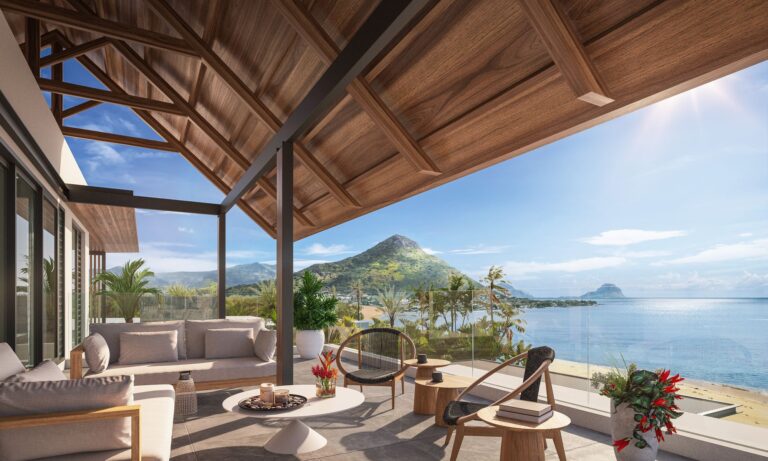
Buying Property in Mauritius as a Foreigner: the 2026 Guide
Buying routes, steps, EDB authorisation, real costs, residence from USD 375,000: the complete process for foreigners buying in Mauritius, checked a…

RES in Mauritius: A Discreet and Flexible Scheme for Foreign Investors
Discover the discreet RES scheme in Mauritius, its advantages over the PDS, suitable profiles, and accessible programme examples.
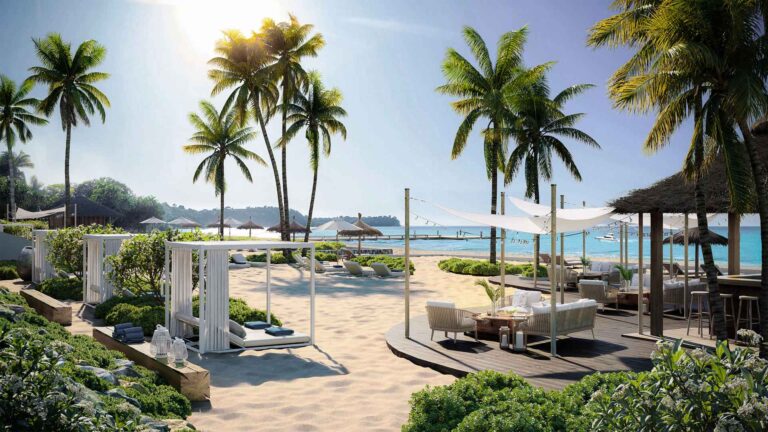
All new property developments in Mauritius
Discover new developments in Mauritius and explore opportunities tailored to your real estate project.
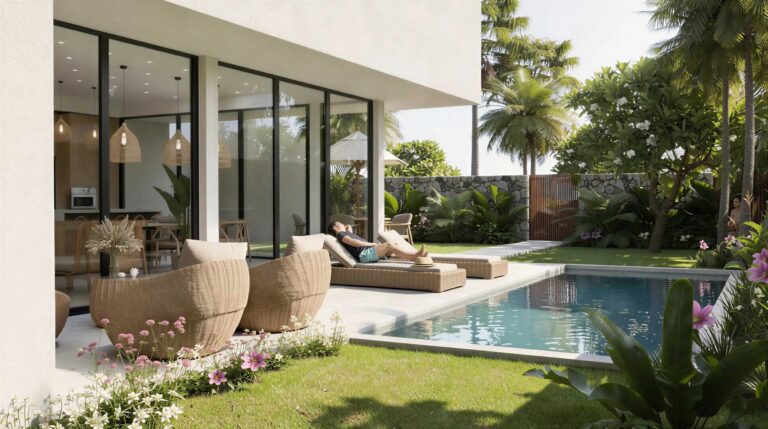
Tree Valley — new villas in Black River
Tree Valley Residences in Rivière Noire, on the west coast of Mauritius: 24 contemporary 3-bedroom villas with private pools.
Planning a property project?
Let’s talk about your project in Mauritius
Westimmo guides you through the analysis, selection and securing of your property project in Mauritius.